TEACHING & RESEARCH
THE WILLOW BASKET PROJECT
+ WILLOW FARM
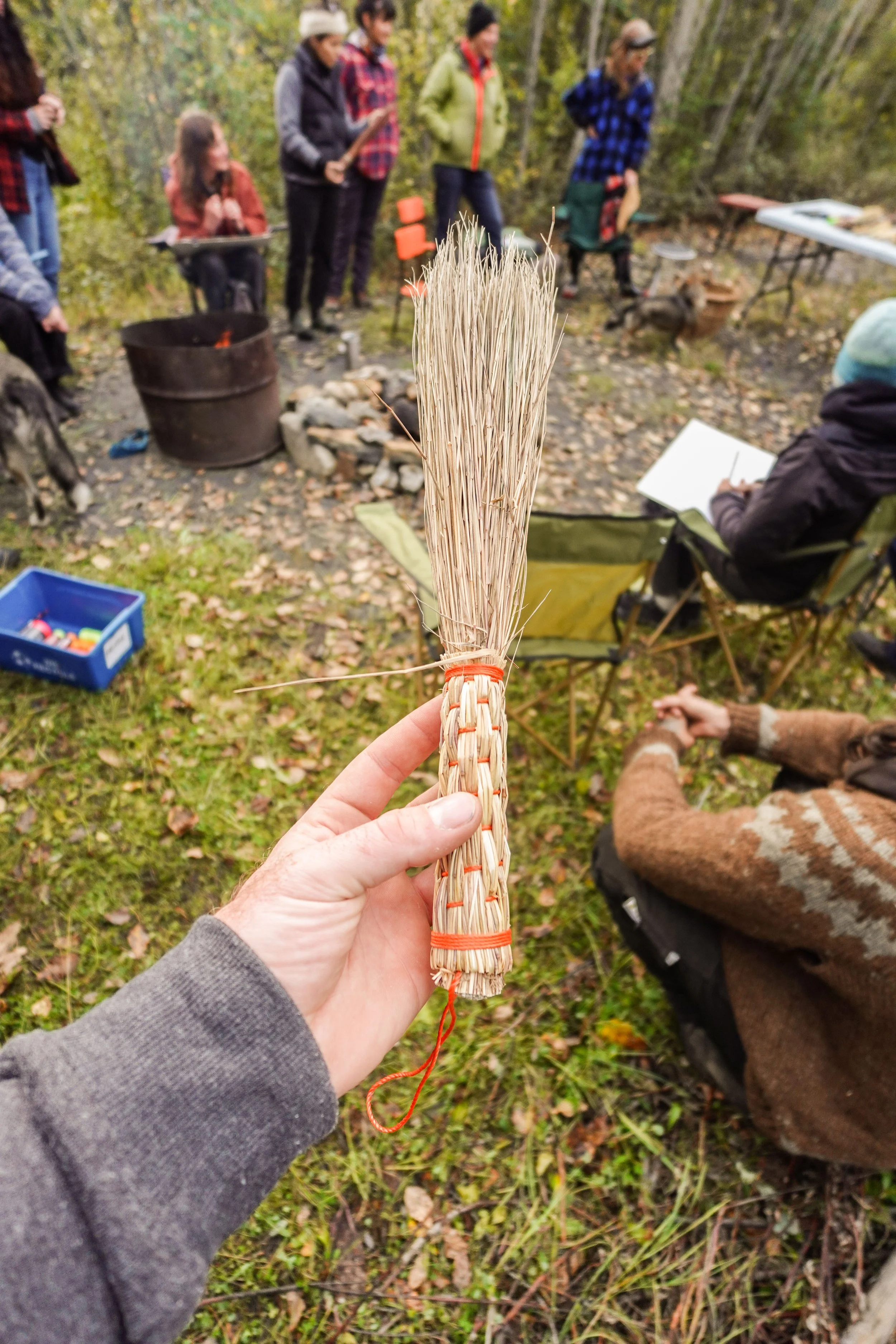
The Willow Basket Project is a land-based arts and research project led by Aubyn O’Grady and Jackie Olson at the Yukon School of Visual Arts (YSOVA).The project began with a grant from the University of the Arctic in 2022 which helped us to begin working towards our goal of establishing a Summer Institute at YSOVA dedicated to environmental and land art practices, using locally sourced and foraged art materials (such as willow), and exploring creative and arts approaches to pressing community issues (such as waste diversion and housing).
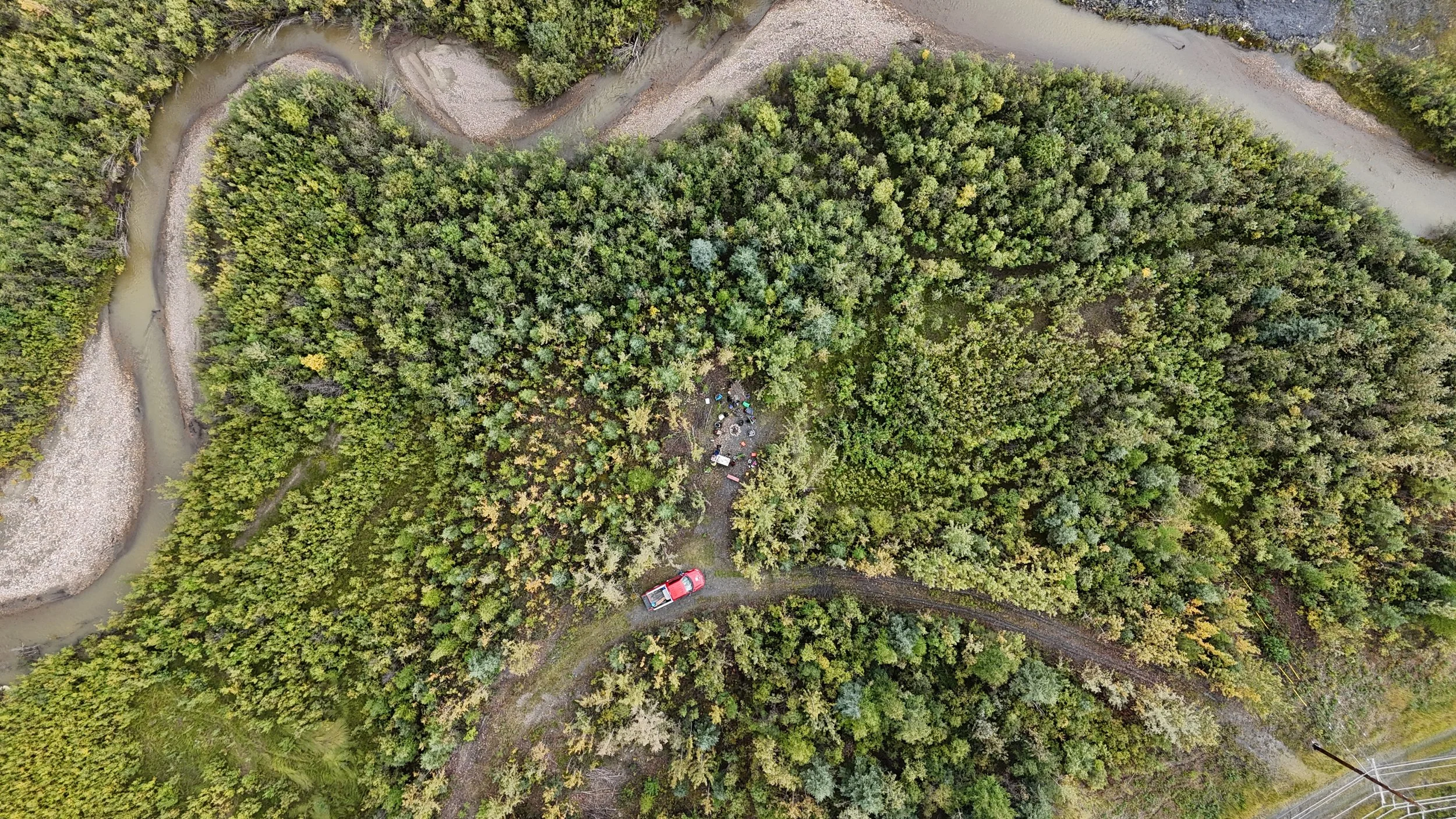
The Willow farm was born from the Willow Basket project and provides a core demonstrator for the Art of Mining Project. While willow is an abundant material in the Yukon, not all willow is good for weaving. To facilitate growth of healthy weaving willow, and a space to teach students about land-based practices, Jackie and Aubyn partnered with the Favron Family to establish the Willow Farm.
Today the willow farm has become a learning laboratory and demonstrator for a more patient, intimate and less extractive artistic and pedagogical practice. The farm is located a short but necessary distance form Dawson City on 2-3 claim wide section situated along hunker creek.
Est. 2022, ongoing
Photo by Michael MacLean
THE ART OF MINING PROJECT
The Art of Mining Project is a research-creation initiative by Aubyn O’Grady and Jackie Olson that integrates artistic practice, scholarly investigation, and experimentation to develop new knowledge on land remediation through creative interventions. It moves beyond artistic responses to mining by embedding artistic production within the research process, positioning creative remediation as a method of inquiry and a practical guide for remediation.
The Art of Mining Project seeks to define a “creative remediation” framework that integrates creative practices into environmental recovery efforts on placer mining sites. This project offers an innovative approach to addressing the lasting impact of placer mining while aligning with community land use plans; it is not simply about healing landscapes but reframing relationships to land.
Phase 1: August 2024 with Michael MacLean, OSO Planning + Design
Download a PDF of the Art of Mining publication (2025)
Phase 2: August 2026
CURRENT GRANTS
SSHRC INSIGHT GRANT
Title: Weathering research-creation: Interventions into extractive infrastructures, media systems, and weather education
PI: Stephanie Springgay (McMaster)
Co-investigators: Aubyn O’Grady and Alana Bartol (AuArts)
SSHRC PARTNERSHIP GRANT (Stage 2)
Title: Northern Indigenous Futures: Fostering Early Career Leadership and Research in the Arts
Project Director: Heather Igloliorte (University of Victoria)
Partners: Aubyn O’Grady & Jackie Olson (and many others)
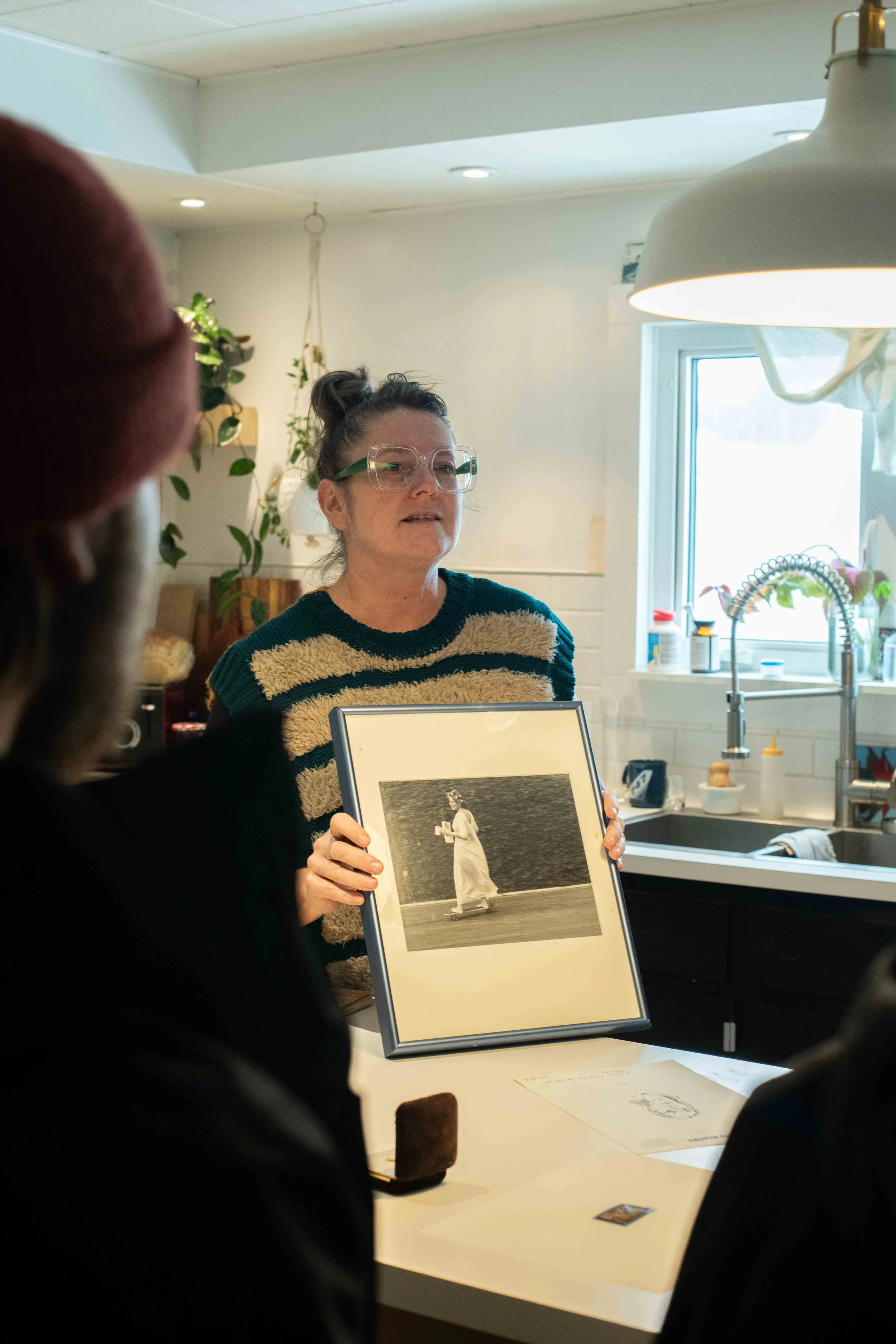
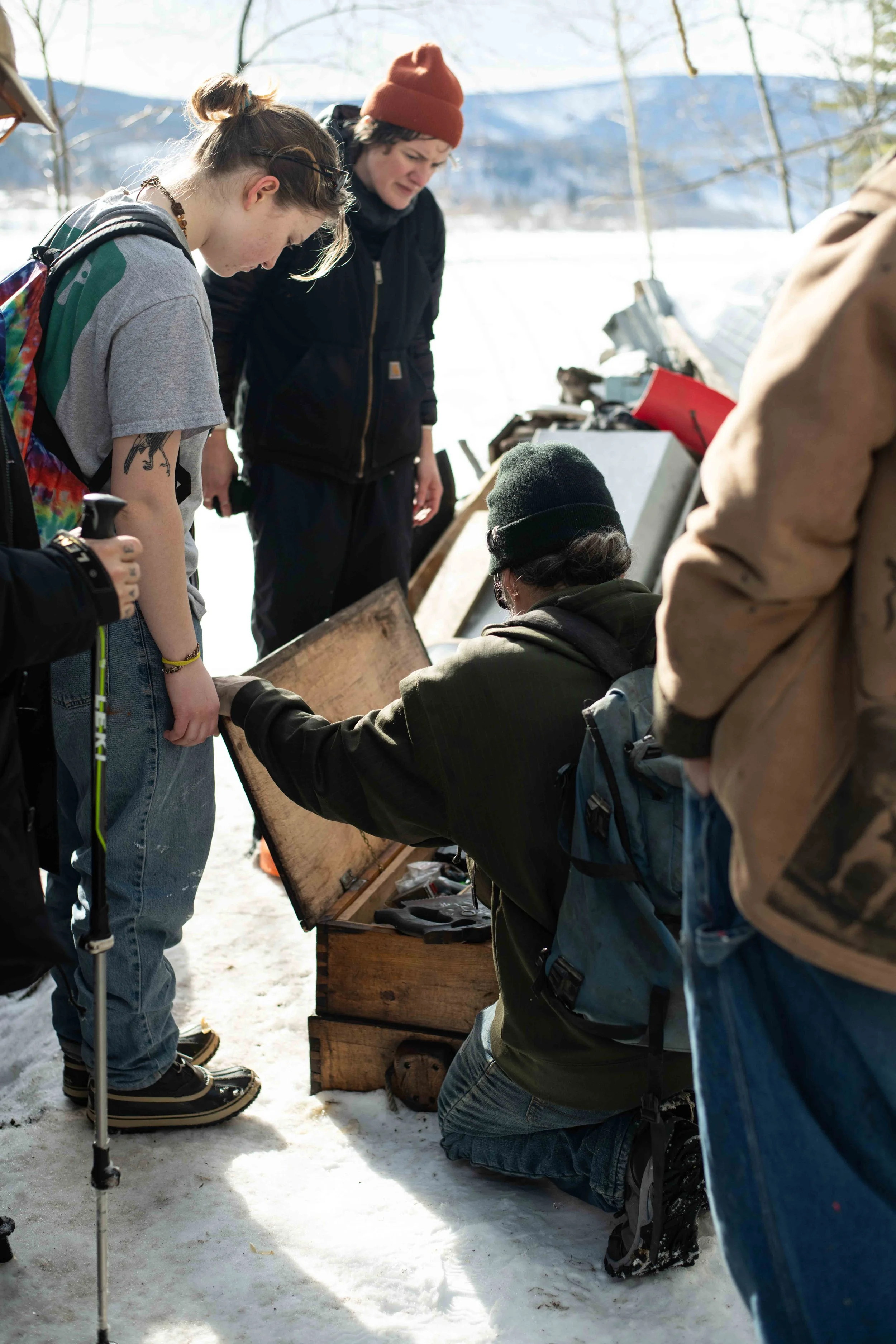
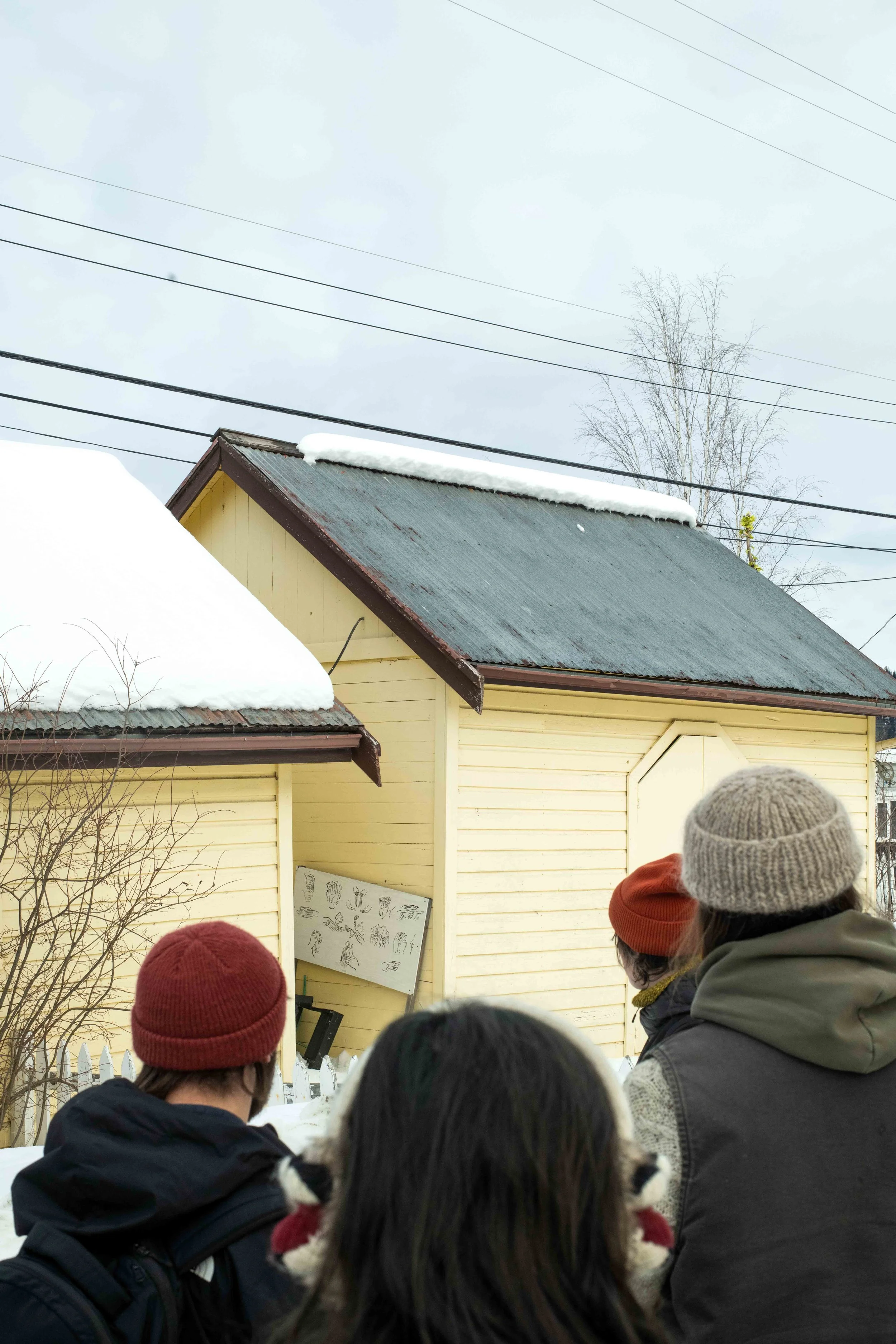
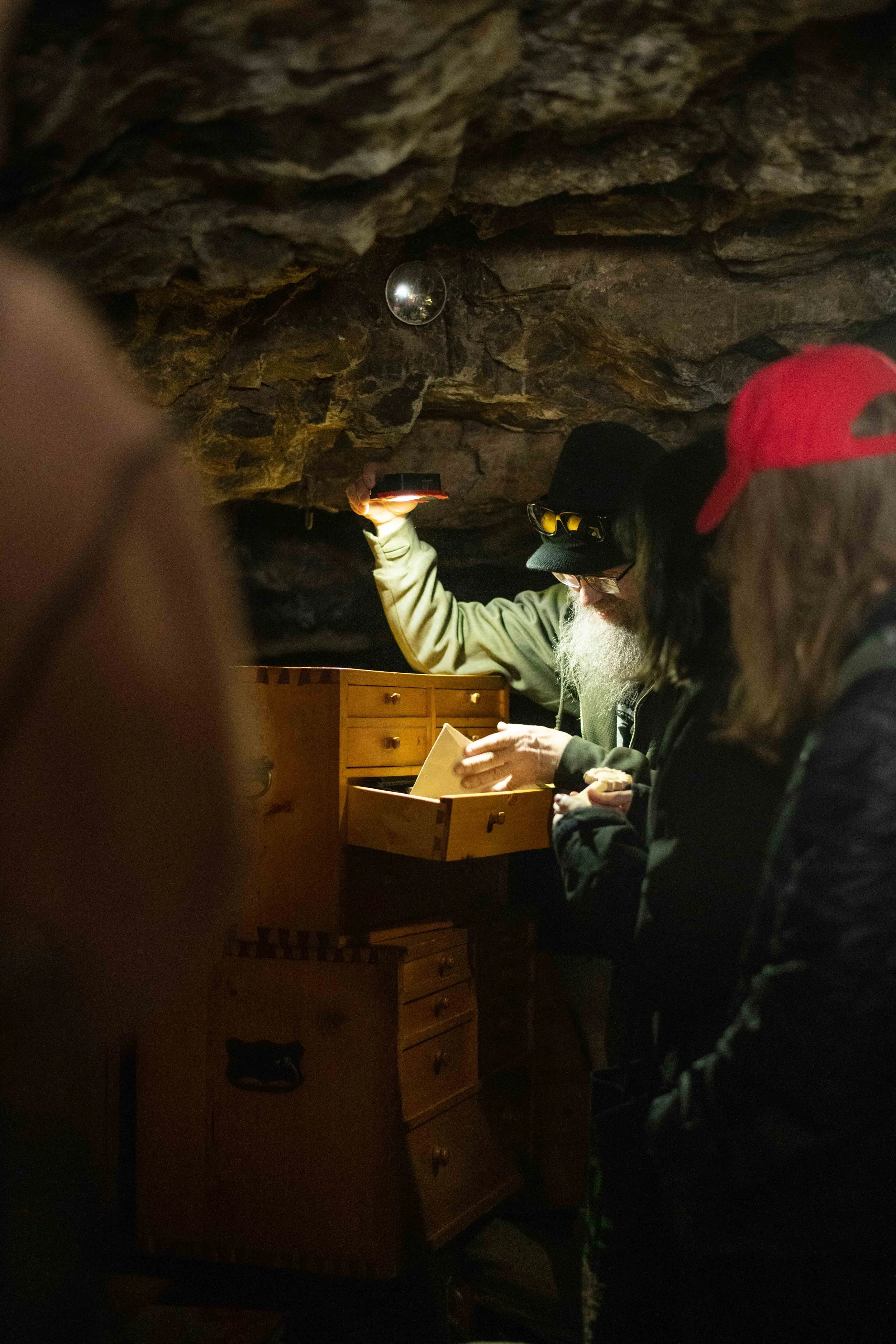
TEACHING
VISUAL CULTURE STUDIES 102
Yukon School of Visual Arts
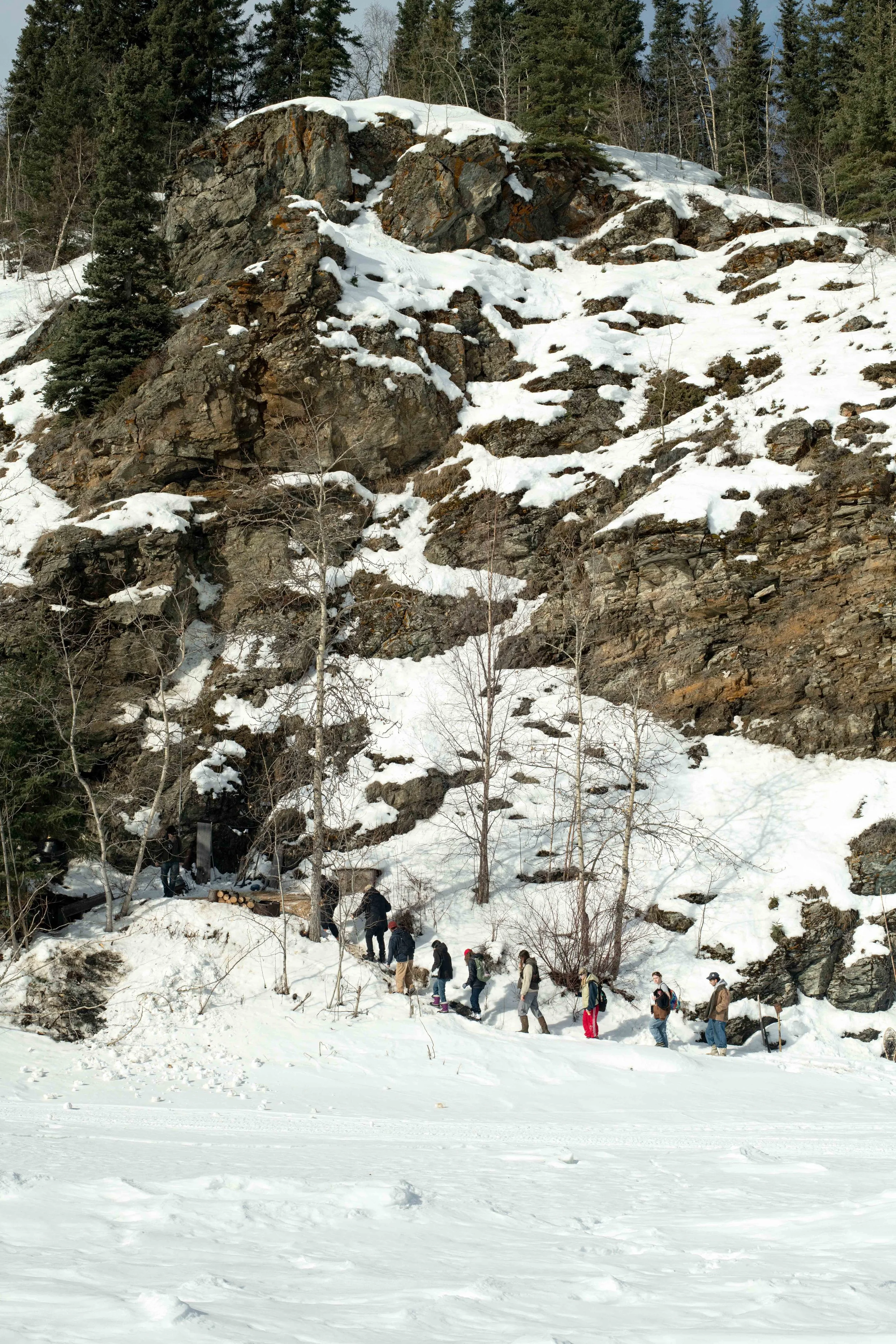
This course asks questions like, what is art for? Who is art for? What does art do? What makes something art? How does art make meaning? How does art function in the formation and understanding of culture? Of politics? Of identity? It doesn’t necessarily provide any answers. Through weekly lectures, readings, writings, in-class assignments, and student-led research projects, we will do our best to find answers to some of these questions together by looking at the work of artists. This course will approach critical topics such as art as-cultural revitalization, activism, decolonial aesthetics, art institutions, and humour, from a place-based and situated perspective, acknowledging and respecting the long history of creative expression on what is contemporarily known as Tr’ondëk Hwëch’in Territory.
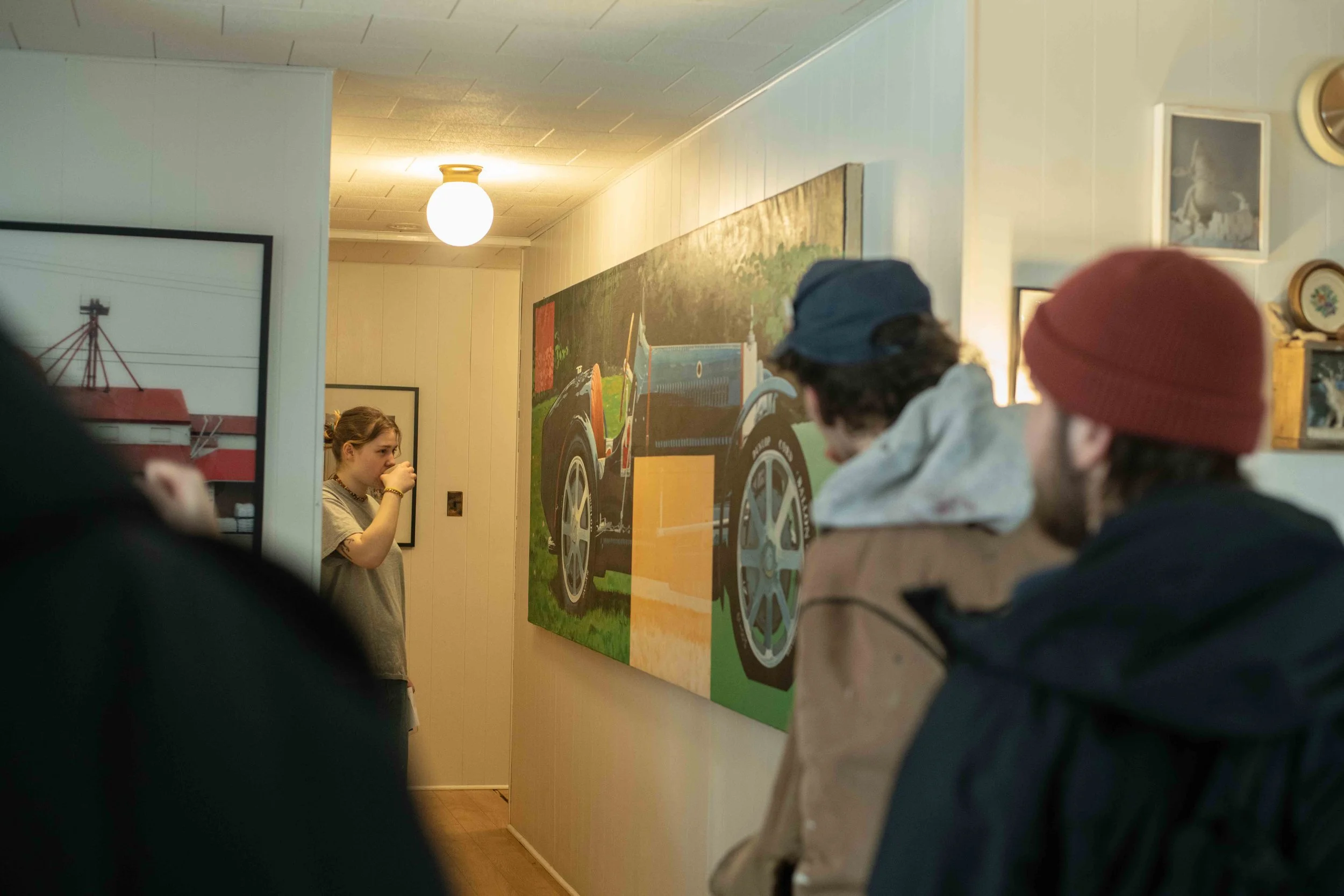
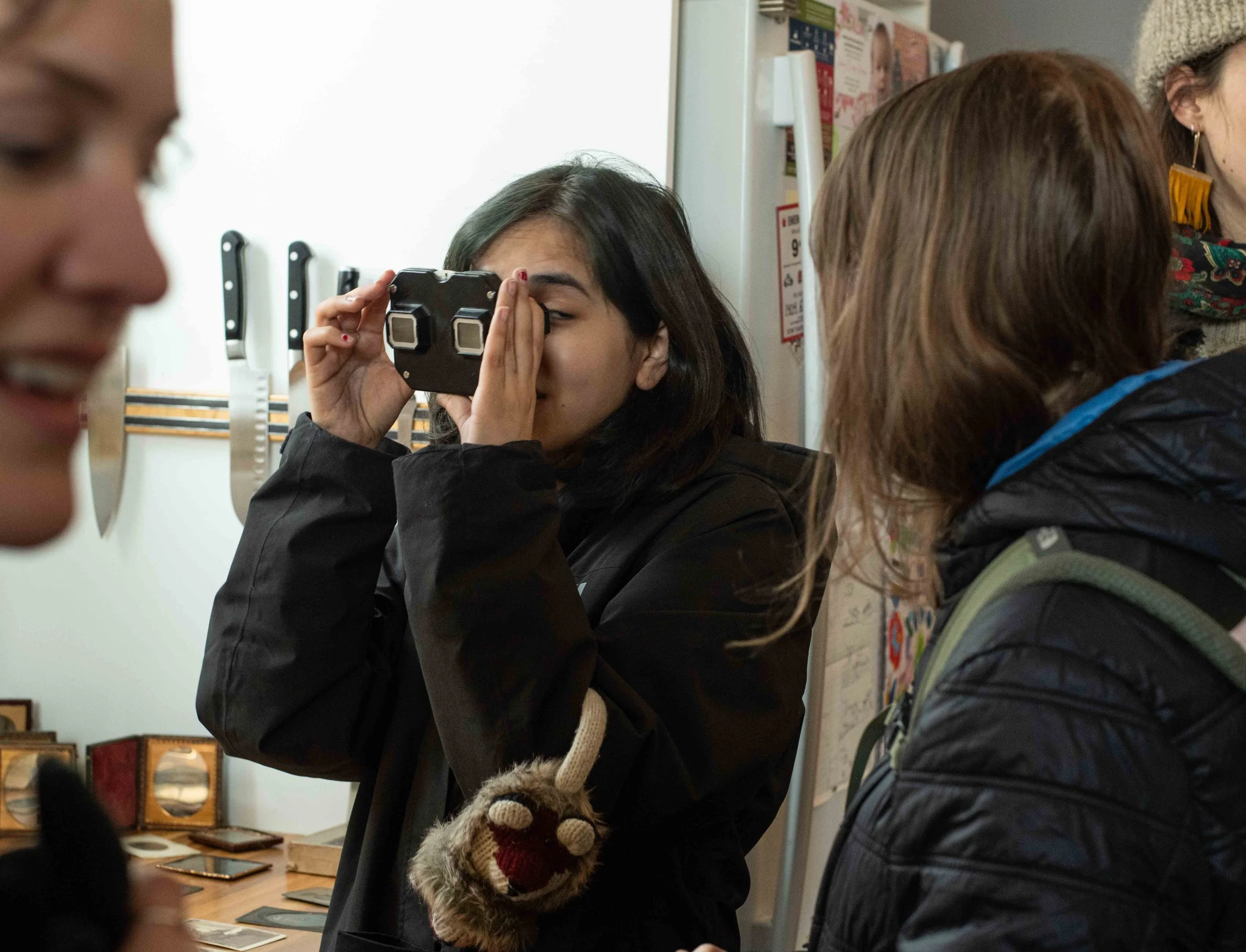
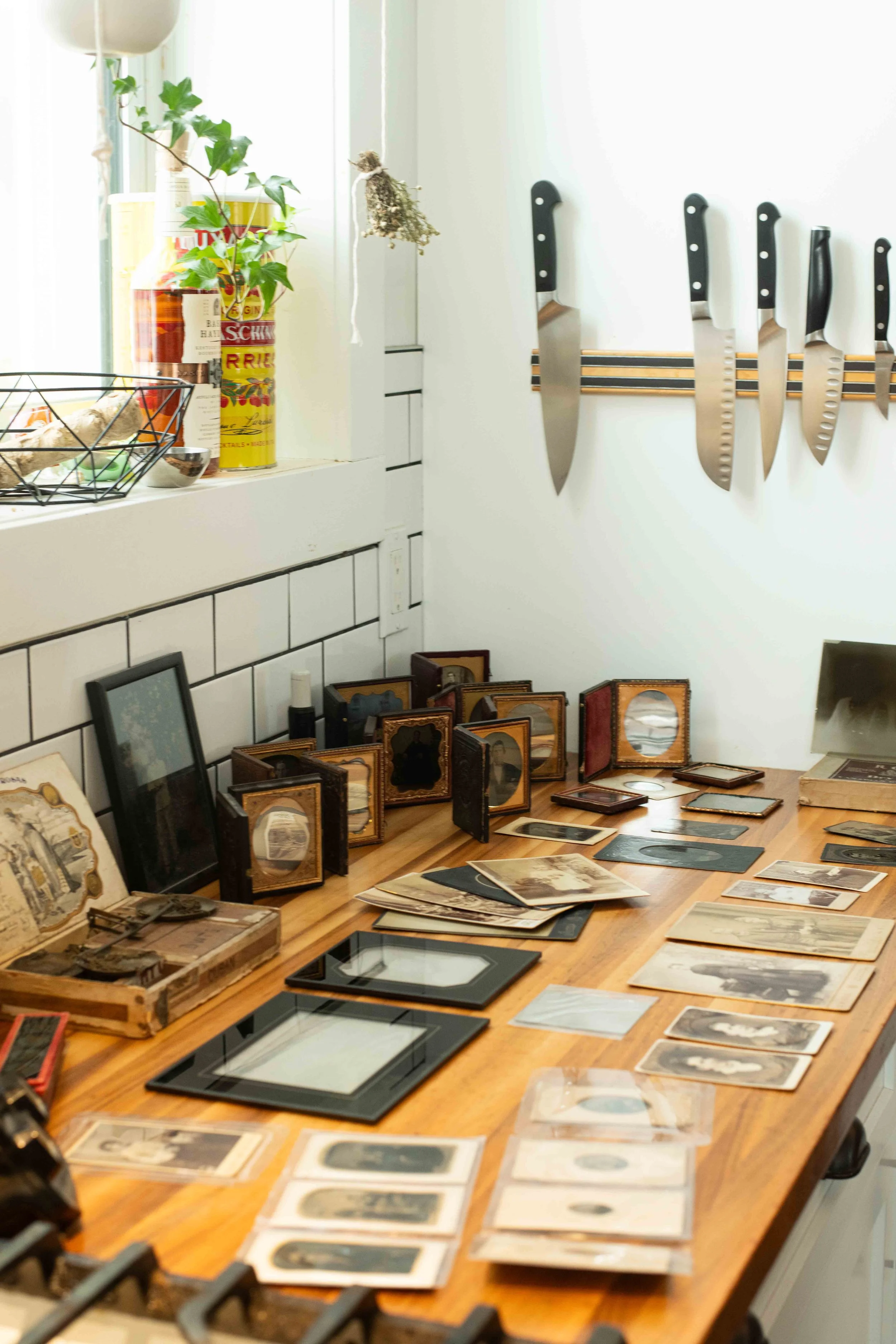
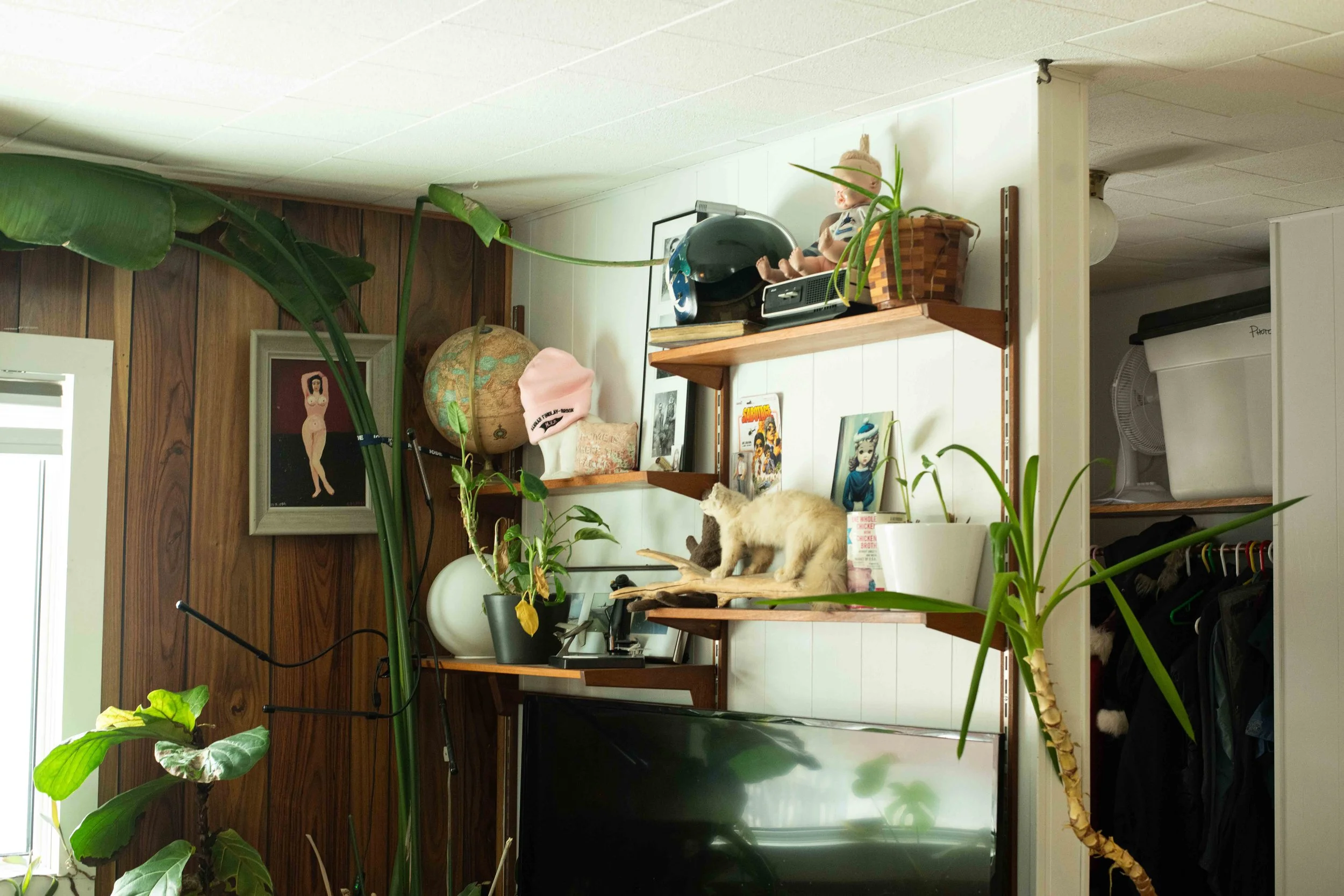
Above photos of VCS 102 “Local Art Walk” by Miriam Behman
EXPANDED FIELD
with Jackie Olson, Yukon School of Visual Arts
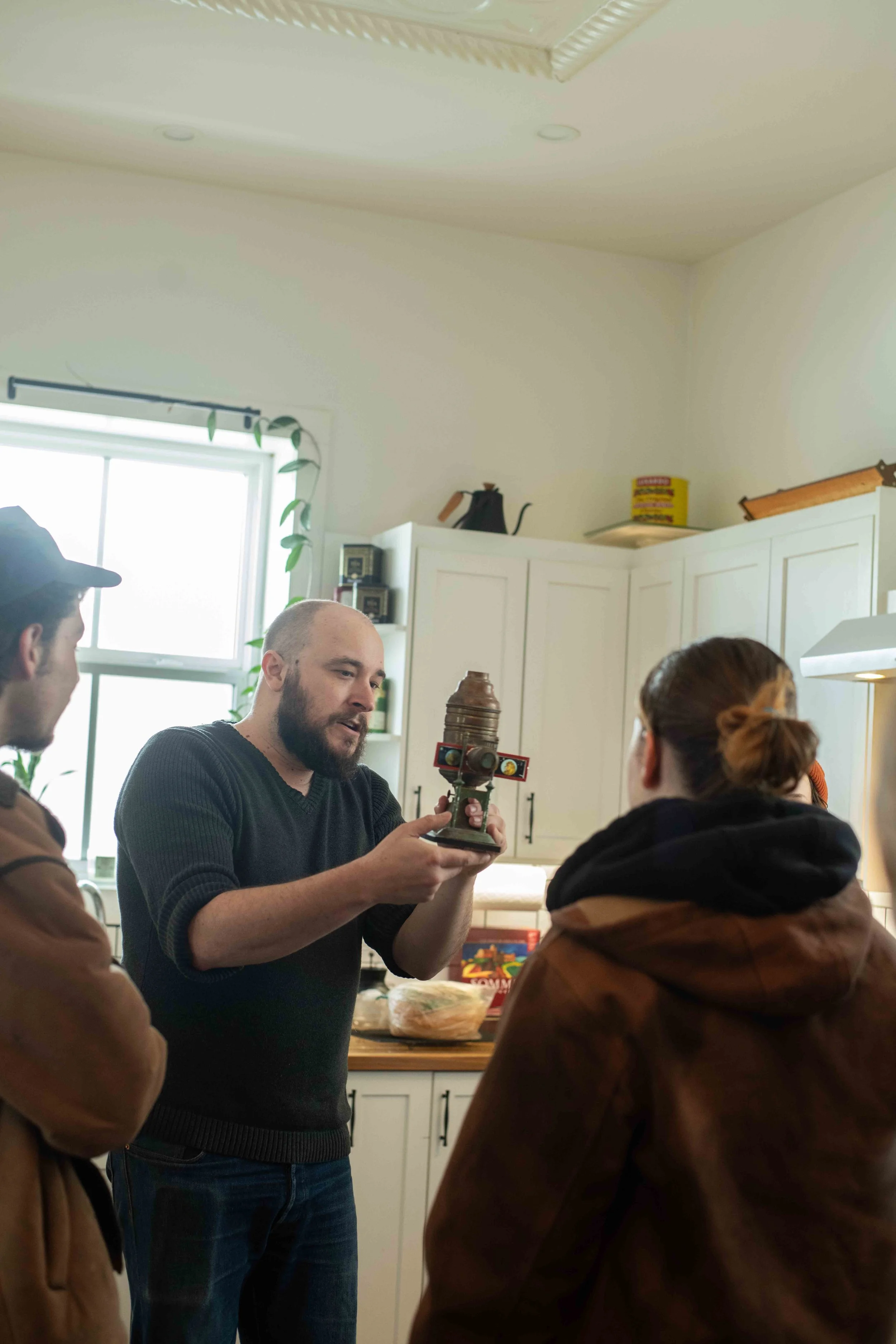
The Expanded Field: Local Materialscourse circulates around Trʼondëk Hwëchʼin artist Jackie Olson’s process-based practice, focusing on the many varieties of willow that grow abundantly on this territory and other natural or foraged materials (including waste). Students will harvest their own willow supply (along with fireweed and wild rhubarb, and other natural materials) and learn to break willow down to its most basic form; the long fibres held between the soft heart wood and the bark. These fibres will be processed to make a pulp, which will be used to make paper and pulp-based sculptural forms. This course is divided between foraging field trips, hands-on workshops, the occasional lecture, and independent studio work. On field days, students can expect to spend time outside, no matter the weather, gathering course materials. Field trips will involve car-pooling to off-site locations.
PUBLICATIONS
PODCAST
EPISODES
O’Grady, A., Brunette, K., (Eds) (2025). Relate North: Learning from the Land. InSEA Press.
O’Grady, A., & Ball, A. (2022). Boom Bust Steam: A Public Art Response to a Problematic Monument. Relate North, 9. InSEA Press.
O’Grady, A., and Jokela, T. (Eds) (2023). Relate North 10: Possible Futures Virtual Exhibition Catalogue. University of Lapland Press, Rovaniemi, Finland.
For the Wild Podcast: ILLUMINATING WORLDVIEWS on The Art That Reclaims Us S1:4
In this resounding end to our Illuminating Worldviews series, Ayana speaks with artists Dr. Aubyn O’Grady and Jackie Olson about collective art and creative processes. Aubyn and Jackie share about their work on The Willow Basket Project at the Yukon School of Visual Arts and explore the ways that art can root us in place, support mining reclamation work, and even build bridges with unlikely allies.
Through this project, they invite dialogue between artists, miners, and community members, reimagining mined landscapes as spaces of regeneration and cultural reconnection. This episode serves as a homage to how creative work can support healing for the land and open new pathways of relationship and understanding.
CONFERENCES
& INVITED
LECTURES
O’Grady, A., Olson, J., and Young, A. (2025). The Willow Basket Project: Practice of Community Resilience at the Yukon School of Visual Arts. Illuminating Worldviews, A Community Dialogue Series. Northern Council for Global Cooperation.
O’Grady, (2025). The Art of Mining. ACUNS | YukonU Research talk [Virtual Panel]
O’Grady, A.(2024). Everything is Getting Milder [Keynote]. ASAD Network’s Relate North 12 Research Symposium, Rovaniemi, Finland.
O’Grady, A., and Olson, J. (2024). Gathering otherwise alongside: A field school in place [Panel]. University Art Association of Canada Conference, Western University, London, Ontario.
O’Grady, A., and Olson, J. (2024).The Willow Basket Project. [Keynote]The Dawson City Gold Show, Dawson City, YT.
O’Grady, A. (2024). Running an Art School is a lot like Running a Feminist Pro-Wrestling League [Keynote]. ArtSpeaks. University of Lethbridge, Lethbridge, AB.
O’Grady, A., and Olson, J. (2023). The Willow Basket Project: Weaving expertise together at the Yukon School of Visual Arts to build community resilience. University Art Association of Canada Conference, Banff, AB.
O’Grady, A., and Springgay, S.(Co-chairs) (2023). In the middle of everywhere: WalkingLab Field School. University Art Association of Canada Conference, Banff, AB.
O’Grady, A. (2023). A site-responsive Foundation Year Program in the Yukon. On Not Knowing: How Artists Teach, Glasgow School of the Arts + University Arts + Uniarts Helsinki. Glasgow, Scotland.
O’Grady, A., and Olson, J. (2023). The Willow Basket Project. ASAD Network’s Relate North 10: Possible Futures Research Symposium, Whitehorse, YT.
O’Grady, A. (2022). New Directions in Arctic Art Education. [Panel] Arctic Art Summit, Whitehorse, Yukon.
O’Grady, A. (2022). Storying the Yukon School of Visual Arts with a Mediate-Ore. Yukon Riverside Arts Festival, Dawson City, Yukon.
O’Grady, A (2022). A Tailing Pile Can Be an Amphitheater. CreateSpace Public Art Forum 2022. https://www.youtube.com/watch?v=VgoAbXScKi0
O’Grady, A. (2021). Local Field School: capacity building through art in Dawson City. Relate North Symposium, Tromsk, Russia.
O’Grady, A. (2019). Unpacking the Instant Class Kit. Yukon School of Visual Arts Master Class Series. Dawson City, Yukon.
O’Grady, A. (2018). School. CPAWS + Canadian Wilderness Residency. Whitehorse, YT.
O’Grady, A. (2018). Swimming Lessons. Arctic Arts Summit, Rovaniemi, Finland.
O’Grady, A. (2018). 6th International Polar Tourism Research Network (IPTRN) conference and community tour: creative forces in the polar regions: cultures, economies, innovations and change in tourism.
O’Grady, A. (2017). Swimming Lessons. International Deleuze Studies Conference, Toronto, ON
O’Grady, A. and Gallagher, B. (2017). Ecotome. Annual Heritage Conservation Symposium, School of Indigenous and Canadian Studies, Carleton University, ON
O’Grady, A. and Pelletier, A. (2016) Spectacle and Pleasure with the League of Lady Wrestlers. OCAD University, Toronto ON
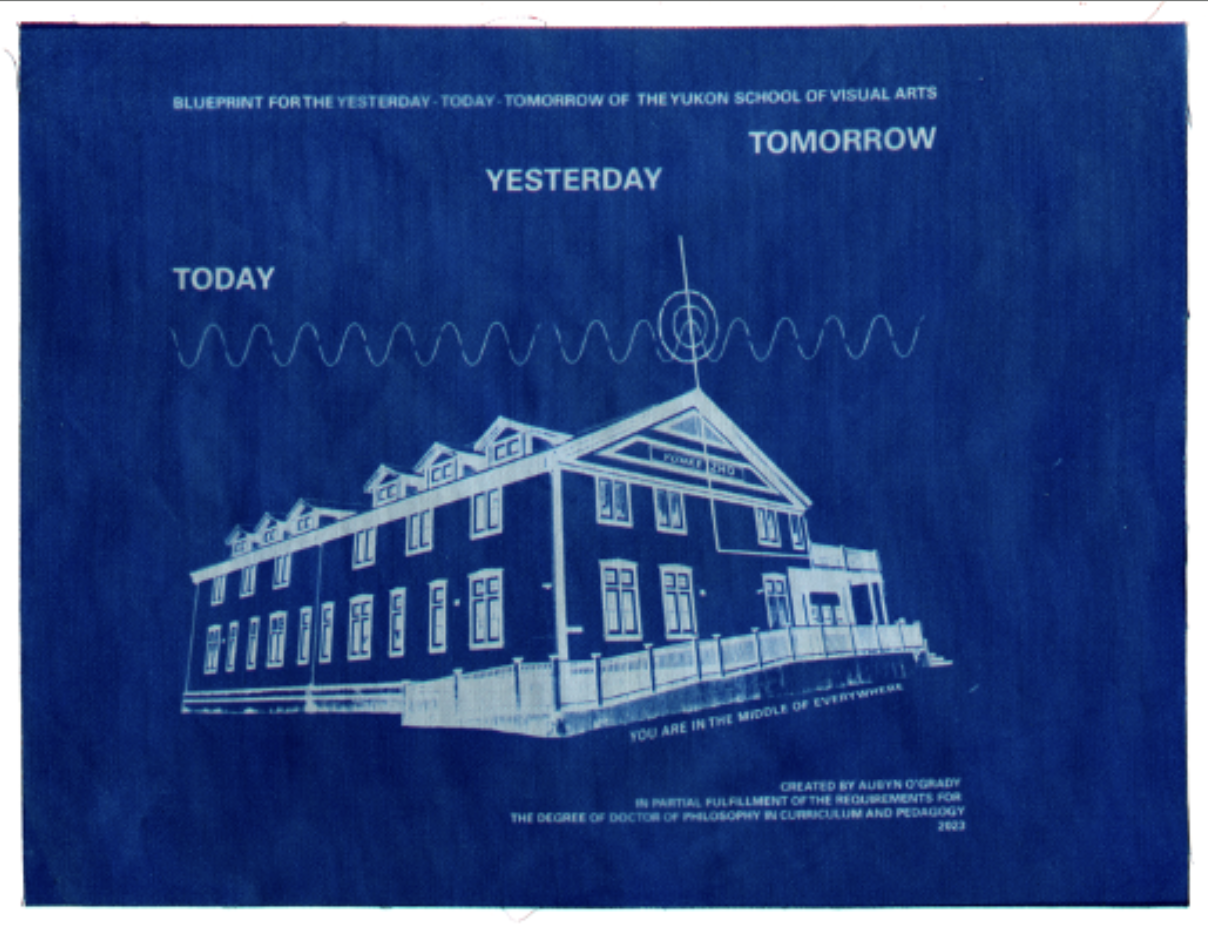
Cyanotype print of the Blueprint for the Yesterday-Today-Tomorrow- of the Yukon School of Visual Arts poster designed and printed by Aubyn O’Grady. Edition of 5.
Abstract
This dissertation accompanies the creative output of a site-specific research-creation project that engages with the Yukon School of Visual Arts (YSOVA), a small post-secondary visual arts school located in the Canadian subarctic town of Dawson City, Yukon, on Tr'ondëk Hwëch'in Territory. The creative output is a crystal radio set adapted with a gold nugget receiver and soundscape, permanently installed at YSOVA. As the receiving crystal in my radio, I bring gold in as a way of speaking through the land and being in relation to the land while also recognizing that as a settler and a guest on this territory, my approach to thinking-making-doing (Springgay & Truman, 2017b) has not been shaped by this land. My theoretical-methodological-ethical framework is informed by a local ethics derived from the land: Tr’ëhudè or going through the world in a good way (McLeod & Beaumont, 2020). It is also shaped by concepts such as site-specificity (Liboiron, 2021a), listening in relation (Donald, 2009), hungry listening (Robinson, 2020), place and place-based methods, the environmental humanities, storytelling, feminist new materialism, decolonial aesthetics, counter-archiving and anarchiving practices, and autotheory. The form of this framework is modelled after how a radio functions and is presented as three interrelated phases: tuning, receiving and transmitting. Each phase describes the strategies I employ to ground this framework throughout the research, which is presented in five parts. One part involves developing a history of YSOVA and the environment that led to its creation through interviews and archival research. However, telling the story of this place involves more than just listening to the people who started the school. It includes listening to the stories from the school itself and the land it sits on. I position YSOVA as an interpretive, time-bending site to interrogate how art and creative expression move alongside, with, and through multiple worldviews, theories, economies, and futurities. While I craft strategic directives for YSOVA drawn from this research and my experience as the school's Program Director, I present this dissertation as unfinished: there are more stories to be told and more work to be done in a good way.